Search This Blog

Sunday, October 11, 2015

More Genealogy Education Goals and My Progress, Part II

Earlier this year, I created a list of long term genealogy education goals, and a list of skill areas to develop.

In my last post, I detailed my progress toward the first two goals listed below:
  1. I will read scholarly journals.  √
  2. I will attend a genealogical institute.  √
  3. I will attend one or more conferences.
  4. I will participate in webinars. 
  5. I will continue to build my library, read books and participate in book studies. 
  6. I will work with unfamiliar record types.
  7. I will keep a record my educational activities and evaluate them quarterly.
This post will discuss the progress toward Goals 3 and 4: "I will attend one or more conferences," and "I will participate in webinars." Both of these goals can incur significant cost. It takes some research and planning to fulfill these goals without breaking the bank. 

Goal 3 - "I will attend one or more conferences." 

While attending a conference can be expensive due to travel and the cost of the conference itself, the value of the learning and networking can justify the expense. Because I had already attended a national institute, I decided I should concentrate on finding a local or state conference this fall. I was very fortunate that the two-day Minnesota Genealogy Society1 (MGS) North Star Conference was held less than 10 miles from my house. The conference was small but the crowd was enthusiastic.

Day One, Friday afternoon, was held at the society's South St. Paul location. I attended a class by Paula Stuart Warren 2 which was great fun. She used real-life examples and had attendees collaborate in groups. It was really interesting to see how different groups had different ideas about the clues presented and where to look next.

Day Two, Saturday, was held at Inver Hills Community College, less than 3 miles from my home. You can't get any closer than that! I attended several sessions including the keynote and final session by David Rencher 3Chief Genealogical Officer for FamilySearch

David Rencher's presentations were not only enlightening but very entertaining. And he presented an opportunity for all to contribute to Preserve the Pensions and have the donations matched by MGS, then matched again by the Federation of Genealogical Societies, and then matched again by Ancestry.com. Every $1 donated became $8 for the Preserve the Pension fund.

The conference was very reasonably priced, as a member I paid $80 for Friday afternoon and all-day Saturday sessions. The speakers were very knowledgable - I consider it a day very well spent.


I also participated in some virtual conferences this year. The Association of Professional Genealogists 4 held a virtual conference January 8 and January 9. There were a variety of pricing options; I purchased the entire conference of 9 sessions and the digital syllabus for $145. You must be a member to participate. I was unable to watch any of the sessions live but watched all of them after the archived sessions became available online in early February. The archived online access ended after 30 days.


Another virtual conference I participated in was the National Genealogical Society 5 Conference held in May. The sessions were all extremely educational and entertaining, presented by nationally-known experts.

I did not view any of the sessions live due to my schedule but was able to view them almost immediately afterward until mid-August when access was removed.

In my opinion it was another very well-spent genealogy dollar.


This fall I also tried Family Tree University's 6 Fall Conference. This conference is just a little bit different than the other virtual conferences in that it added some other social media functions, like chats and discussion boards. It also added the ability to download the actual presentation for viewing later. There were 15 sessions in four different tracks. This was a little more expensive than some of the others but I tried it because the names of the speakers were very well known to me. The sessions were shorter than most conference sessions, about 30 minutes. But they were very well done and I would definitely try this again.


Goal 4 - "I will participate in webinars." 

I'm going to brag just a little here - I rock at attending and/or viewing webinars. My day job interferes with attending webinars and hangouts live during the day. I try to attend certain live webinars at night or on weekends. I've created a list of webinar sites that I can use to find either free or low cost webinars at times when I am doing laundry or other tasks that don't require my full attention. 

I won't list the actual webinars here because the list is actually quite long: Thus far, in 2015, I have attended or viewed almost 100 webinars amounting to over 100 hours of education. As mentioned in my last blog post, I track the webinars with the Title, Sponsor, Presenter, Topic and Sub-topic, Length, Links to Presenter notes (downloaded and located on my computer) and My Notes.

What I will list are the locations of the sites where I have found webinars, either live or recorded, that are relevant to my goals. Perhaps they will also help you.

FamilyTreeWebinars.com 7, sponsored by Legacy Software© 8, is one of my favorite resources. Even though it is sponsored by a family tree database software company, many of the webinars here are applicable to general research as opposed to using Legacy software. There is a fee. When I joined, the fee was just under $50 annually. You can also join for just one month to see if the resource is of value to you; the cost at the time of this writing was just under ten dollars. So far this year, I have viewed over 25 webinars for over 25 hours. This is less than $2 an hour, and frankly, I think it is a wonderful value. Many webinars are free, and most are free for the first week or so after posting. So try before you buy and see if it works for you. Many of the names of presenters were very familiar to me and are nationally recognized genealogy speakers and educators. You do not need to be a member to view the list of available webinars.


I have viewed ten webinars at the Illinois State Genealogical Society 9 (ILGenSoc) website, over ten hours of webinar learning. Again, many of the presenters are nationally recognized genealogy speakers and educators. Viewing these webinars requires that you join the Illinois  State Genealogical Society. The cost is very reasonable, only $35 a year for an individual at the time of this writing. If you have ancestors who spent any time in Illinois, it's a great value. But even if you didn't the webinars are likely to be of interest. 

The one downfall I have noticed in the IlGenSoc website as an iPad user: the webpage listing of webinars has the actual webinars embedded in it. This is fine when there are just a few. But when there are dozens, it takes a while to load and is difficult to watch webinars further down the list.

Another favorite of mine is the Southern California Genealogical Society 10 (SCGS). They have a great catalog of archived libraries and add to it monthly, usually the first Saturday and third Wednesday. The live webinar broadcast is open to the public but once they are placed in the archives the webinars are available only to members. 

The cost of membership to the Southern California Genealogical Society is very reasonable: a one-year individual membership is $35 annually. I almost always recognize the speaker's name as someone who is well regarded in the genealogy field. I have viewed over twenty SCGS webinars live or archived. 

RootsTech Video Archive 11 allows the viewer to watch webinars from the 2015 RootsTech conference. I've always wanted to attend this very popular conference in Salt Lake City. But the associated costs of travel and hotel make it difficult to so.  This year's conference had almost 24,000 attendees. If that kind of crowd makes you claustrophobic, you might want to consider watching the webinars live during the conference, or you can watch the archived webinars later. Only a small percentage of the sessions are presented via the web,  but for those of us who don't attend, it's a great resource. Those who do attend the conference can skip the live webinar presentations and go to other sessions they are interested in, knowing they can see the webinars later.

While the majority of the webinars I attended or viewed online were from those listed above, there were a few other resources that I used as well.

Youtube.com12 has lots of genealogy videos, many of them are part of a series and/or "channel" and are added to frequently.

Dear Myrtle13 has many different series on YouTube, including Mastering Genealogical Proof book studies, Demystifying DNA and others. What I absolutely love about Dear Myrtle is that she provides wonderful introduction and intermediate material to viewers in a very understandable and non-threatening way. She has great guests and panelists that add richness to discussions. And she encourages you to learn more and dig deeper into those tough subjects like genealogical proof standards. Dear Myrtle also offers an ongoing list of live webinars available each week at Geneawebinars.com14.

Another Youtube channel is Ancestry.com Desktop Education Series. Most videos, if not all, are presented by Christa Cowen, the Barefoot Genealogist15.  These videos can also be seen at Ancestry.com16 in the video area.

I'm pretty happy with my progress so far. The conferences and webinars I've attended and/or viewed have all had topics that fit closely with my areas to grow. And in addition to the above conference opportunities, I plan to attend at least one additional conference this year, the NARA Virtual Genealogy Fair17 held October 21 and 22.

In addition to the above webinar opportunites, I plan to view webinars both live and archived at the Minnesota Genealogical Society18 website. You must be a member to view but membership is very reasonable. There are only 10-12 archive webinars thus far. I hope their plan is to continue to broadcast live webinars then archive them for members to view later.

I have also viewed some webinars sponsored by the Board for Certification of Genealogists (BCG)19  which are available on their website here.

There are so many great quality opportunities for continuing education, and most are a very reasonable cost or free. Sometimes it just hard to choose which to watch next!


Sources

1. Minnesota Genealogical Society, homepage, (http://www.mngs.org/ :accessed 11 Sept 2015)
2. Genealogy By Paula, homepage, (http://genealogybypaula.com/ :accessed 11 Sept 2015)
3. FamilySearch, The Office of the CGO (Chief Genealogy Office), (https://familysearch.org/blog/en/office-cgo-cheif-genealogy-officer/ :accessed 11 Sept 2015)
4. Association of Professional Genealogists, homepage (http://www.apgen.org/ :accessed 11 Sept 2015)
5. National Genealogical Society, homepage (http://www.ngsgenealogy.org/ :accessed 11 Sept 2015)
6. Family Tree University, homepage (http://www.familytreeuniversitey.com/ :accessed 11 Sept 2015)
7. Family Tree Webinars, homepage (http://www.famlytreewebinars.com/ : accessed 11 Sept 2015)
8. Legacy Family Tree (http://www.legacyfamilytree.com/ :accessed 11 Sept 2015)
9. Illinois Genealogical Society, homepage, (http://www.ilgensoc.org/ :accessed 11 Sept 2015)
10. Southern California Genealogical Society, homepage, (http://www.scgsgenealogy.com/ :accessed 11 Sept 2015)
11. RootsTech 2015 Video Archive, homepage, (http://rootstech.org/video :accessed 11 Sept 2015) 
12. Youtube.com, homepage, (http://www.youtube.com/ :accessed 11 Sept 2015)
13. Dear Myrtle, blog, (http://blog.dearmyrtle.com/ :accessed 11 Sept 2015) 
14. Geneawebinars, blog, (http://www.geneawebinars.com/ :accessed 11 Sept 2015)
15. Crista Cowan, blog, (http://blogs.ancestry.com/ancestry/author/ccowan/ :accessed 11 Sept 2015) 
16. Ancestry.com, homepage, (http://www.ancestry.com/ :accessed 11 Sept 2015)
17. National Archives Virtual Genealogy Fair, homepage, (https://www.archives.gov/calendar/genealogy-fair/ : accessed 11 Sept 2015)
18. Board for the Certification of Genealogists, homepage, (http://www.bcgcertifcation.org/ :accessed 11 Sept 2015)




Sunday, October 4, 2015

More Genealogy Education Goals and My Progress, Part I

After writing my educational goals last January, it became apparent that while they were OK goals, they were't specific enough.

This table below shows the specific skill areas that I feel I need to grow. I'm very comfortable with many record types but recognize that I need to learn more about many others.

There are also some research skill areas I need to improve on. I've been searching on the Internet for over twenty years, now I need to research on the Internet. That is, I need to make my searches more concentrated toward a specific task rather than blind searches for whatever may pop up. Sources and citations will be an area that I need to continually work on.

The geographic locations are areas that apply to my personal research and that may change and grow as either new information in uncovered or as I help others in their research.

And the writing skills are the areas I would like to improve in before I publish my ancestors' stories.


Record Types

Research Skills

Geographic Locations

Writing Skills
Land and property

Sources and citations

Northeast: New York,
Pennsylvania, Vermont,
Massachusetts
Beyond the family tree
Wills and probate

Maps and plat books

Midwest: Ohio, Illinois

Using historical context
Historical law

Online searches

Europe: Czech Republic
Editing
DNA

Finding female ancestors

Scandinavia: Iceland, Norway
Copyright
Federal records


Layout and publishing

After I made this table, I started listing ways that I might start building those skills and turned them into long-term goals (not just goals for 2015).
  1. I will read scholarly journals.
  2. I will attend a genealogical institute. 
  3. I will attend one or more conferences.
  4. I will participate in webinars. 
  5. I will continue to build my library, read books and participate in book studies. 
  6. I will work with unfamiliar record types.
  7. I will keep a record my educational activities and evaluate them quarterly.
The seventh goal, "I will keep a record my educational activities and evaluate them quarterly," is actually the reason behind this post. I have been very faithful in recording my activities this year. What follows is my evaluation of the work I have done in the last 6-7 months toward building those skills.

I use Excel to track my educational activities. Tabs across the bottom of the workbook are labeled:
  • Webinars
  • Institutes
  • Conferences
  • Book Studies
  • Article Studies

The columns in each worksheet are similarly labeled but vary slightly for each activity type. Typical column headings are:
  • Date - the date I participated or viewed
  • Sponsoring Organization - conference, institutes, or society sponsoring event
  • Presenter - name and credentials, if known
  • GenTopic - general genealogy topic, say "Research Skills"
  • SubTopic - topic sub-category, say "Online Searches"
  • Length - time spent viewing or attending
  • Handout - link to downloaded handout (organized on my computer)
  • Notes - link to notes taken (organized on my computer)
  • Rating - mini-review on topic and/or speaker

Goal 1- "I will read scholarly journals."

I have probably tripled the amount of time I spend reading journals as compared to years past. However, I need to spend more time studying the articles. I joined an National Genealogical Society Quarterly (NGSQ) Study Group and need to make an effort to schedule myself accordingly. These are the journals I subscribe to:

Goal 2- "I will attend a genealogical institute."

I met this goal by attending IGHR, Institute of Genealogy and Historical Research, in June 2015. I could stop there and just say I met this goal. But instead I want to encourage anyone who might read this to participate in IGHR or one of the other institutes available. There are several including:
  • GRIP, Genealogical Research Institute of Pittsburgh
  • SLIG, Salt Lake Institue of Genealogy
  • NIGR, National Institute on Genealogical Research
  • IGHR, Institute of Genealogy and Historical Research
There are also institutes on genetic genealogy and one or more virtual institutes. If there are others, I would love to hear about them as I have heard nothing but wonderful things about each of the ones listed above. And my own experience was beyond expectations, one of the best values for my genealogy dollars.

The list of speakers at the week-long IGHR in June reads like a "Who's Who" in genealogy expertise. The coordinator of the Intermediate Genealogy & Historical Studies course that I took was Angela McGhie and I cannot say enough about how much I enjoyed the course. I also learned so much from Angela and her guest speakers. Fun & learning - you can't beat that! Speakers (and their topics) during the week-long course included:
  • Thomas W. Jones (Using Evidence)
  • Debbie Parker Wayne (Tax Rolls; DNA)
  • Kimberly T. Powell (Online Searches; Manuscript Collections)
  • John Phillip Colletta (Immigration & Naturalization)
  • Gerald Smith (Local & State Land Records)
  • Michael Strauss (Military Records)
  • Judy G. Russell (Court Records)
  • Angela McGhie (Essential Skills; Vital Record Alternatives; Advanced Census Research; Federal Land Records; Historic Newspapers; Wills and Probate; Evidence Review, Techniques)
The session topics were very closely aligned to my genealogy goals, particularly in Record Types and Research Skills, so I feel that this course was especially suited for me and my goals.

I plan to attend another Institute in the coming year. Because I have family in Birmingham, it may be IGHR as 2016 is the last year it will be held at Samford University. But I have heard such wonderful things about SLIG, GRIP and NIGR; it's a very tough decision.

I will continue my evaluation of my progress toward my goals in Part II.

Saturday, October 3, 2015

Reaching for My 2015 Genealogy Education Goals

It's been months since my last post, but they were busy months. My last post was on my 2015 Genealogy Education Goals and this post will look at how I am doing so far.

The last post ended with these goals: I will...
  1. make it to the end of 2015 still up-to-date with all my readings and homework in ProGen 25.
  2. successfully complete Mastering Genealogical Proof Study Group 37.
  3. learn to critically read articles in professional genealogy registers.
  4. follow the GenLaw Study Group on Dear Myrtle's YouTube channel.
  5. continue to add to my research library.
  6. visit at least one courthouse for research.
So let's see what I've accomplished so far and what I need to do to accomplish those goals.


The first goal was to be up-to-date with readings and homework in ProGen 25. ProGen is an 18-month study course for learning professional genealogy research skills by reading and collaboratively studying the book, Professional Genealogy by Elizabeth Shown Mills. October 2015 marks the 8th of 18 months and I am proud to say I am up-to-date so far. I am a co-leader of our Wednesday group and it is a wonderful learning experience. Even though we are just under half-way through the course, I would recommend this course for anyone considering genealogy as a field of practice or study.


Goal #2 was to successfully complete the Mastering Genealogical Proof Study Group 37. This study group studied and discussed the Thomas W. Jones book, Mastering Genealogical Proof for approximately 12 weeks. I had previously followed two of Dear Myrtle's study groups of the same title and so was familiar with the book. Even so, this group study was challenging as the topic is complex. But it is a critical piece to the professional genealogist's toolbox. I was successful at this goal also and was recently rewarded with a certificate of completion.


The third goal was to learn to critically read articles in professional genealogy journals. I will be the first to say I am not an expert. However, I find that looking at the appendix articles in in the Mastering Genealogical Proof Study Group has changed the way I read articles. When I first started reading journals, I only read articles that I thought pertained to my research. Then I started reading other articles but I only glanced at the footnotes or endnotes while reading the article. Now, the footnotes and/or endnotes are first thing I look at. I try to read more critically and see if I agree with the author's conclusions. And when I find an article that covers an geographical location or topic that I am particularly interested in, I note the sources in the articles in case they may have information that I need. I joined an article study group but have only met with them one time due to scheduling issues on my part. I hope to continue to meet as this is an skill I need to grow.


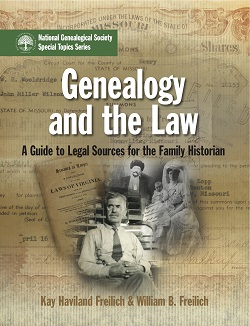
Goal #4 was to follow the GenLaw Study Group on Dear Myrtle's YouTube channel. This study group read and studied the book Genealogy and the Law by Kay Haviland Freilich and William B. Freilich. I did follow through with this goal but recognize that this is an area that I need to grow in, also. What I appreciate about following the study groups with Dear Myrtle is that they are very non-threatening but still rigorous. That is, as rigorous as the follower wants to be. You can study along with the group or just observe. So it is a great introduction to the more difficult topics.


The fifth goal is always a fun thing for me. I love collecting so building a genealogy library was not a chore at all. Of course, I need to build it somewhat slowly as I can't afford to buy all the books I want at once. The book mentioned above, Professional Genealogy, has a wonderful list of sources and recommended reading at the end of each chapter. I used these suggestions when building my library. When available, I purchased or found ebooks online. But my library already fills three tall bookcases. So far I have catalogued about 80% of the books and plan to do the rest soon if for no other reason than to prevent duplicate purchases.

And as for goal #6: so far I am a dismal failure. Although I have broadened my knowledge by attending at least three lectures on the topic of courthouses and legal records, I have yet to visit a courthouse. I still have about 90 days so it is still something I hope to check off my to-do list.

I also created a more detailed list of topics and skills that I need to improve on, and will share that list and my 6 month progress toward those goals in my next post.


Friday, January 30, 2015

My 2015 New Year Genealogy Education Goals: Part 1

As challenged in a post by Randy Seaver in his genealogy blog, Geneamusings, I am going to list my genealogy education goals for 2015.

I am still employed full-time and so must limit my opportunities to after work, weekend and vacation hours. Still, I think I have managed to accumulate quite a list of opportunities for the advancement of my studies.

One very ambitious goal was just started this last week- I signed up for ProGen Study Group 25, which begins soon. I had signed up for a waiting list last summer as indicated in my earlier post here. I was unaware that there were some technical difficulties and some of the names on the waiting list were lost. After no word in over 6 months I decided to contact the new administrator of the program to find out when I might be included and found they had no record of my registration. Fortunately, I kept my copy and was able to promptly send it back. I was accepted into the newly formed group and am awaiting news of the first online meeting.

I also recently signed up for a week-long institute, the Institute of Genealogy and Historical Research at Samford University in Birmingham, Alabama that runs from June 7 through June 12. I am very fortunate in that my sister lives in a nearby suburb and has offered to put me up and to put up with me. I am signed up for the Intermediate Genealogy and Historical Studies course  - I can hardly wait to get there!

And I am currently in the Mastering Genealogical Proof Study Group 37; we just completed our second meeting. This study group will run concurrently with my ProGen Study Group 25 but just for the first 2 months of ProGen study. So I should be able to work it out especially since this is my second time through the MGP book. I do need the practice!

I've been a member of several genealogical societies for years. I joined a few others this past year. Most have a quarterly magazine or journal and some educational opportunities. These are the societies I currently belong to and the publications (if available) that are a benefit of membership:

Other family history/educational magazines I subscribe to:
  • Family Tree Magazine
  • American History

Some of these magazines are on my Kindle App on my iPad where I can read them on one of our many 3 hour summer car trips. Others, that arrive in PDF version, are on my iBooks app also on my iPad. I like being able to bring several months worth on one device.

I also have memberships in many genealogy and research websites. Some are free and some require a paid subscription. I will list these in a future post.

I am addicted to blogs! I have been following 50 or more (nothing like the 1500 that Randy Seaver follows) and find something new and helpful every week. I read them at least once a week, some post every day and so I read several days worth from that author. Many post weekly or slightly less often. I choose blogs that appeal to me based on interest, midwest genealogy or technology in genealogy, for example. Or blogs based on genealogy software that I use. I will list my old favorites, and some new ones, in a future post.

Webinars and videos, live and archived, are quickly becoming a favorite for me, too. I have several favorite sites which I will list in a future post.

And books! I love books; hardcover, paperback, e-books, it doesn't matter. In a previous post I indicated one of my last year's professional genealogy goals was to build a research library. I'm not finished yet but I have to say that it is a lot of fun.  It was somewhat difficult to find online references  listing "must have" books. I even posted online at Dear Myrtle last May to see if some of the others viewing would list their top ten. Dear Myrtle posted some of her favorites in her G+ post of December 26 (thanks, Dear Myrtle!) So I will follow suit and list some of my top favorites in a future post.

So I have lots of opportunities this year. My goals this year: I will...

  • make it to the end of 2015 still up-to-date with all my readings and homework in ProGen25.
  • successfully complete Mastering Genealogical Proof Study Group 37.
  • learn to critically read articles in professional genealogy registers.
  • follow the GenLaw Study Group on Dear Myrtle's YouTube channel.
  • continue to add to my research library.
  • visit at least one courthouse for research.

I have much to learn but lots of opportunities!


Sunday, January 25, 2015

52 Ancestors in 52 Weeks - Ancestor # 3: Joseph Oliver Eken

As announced by Amy Johnson Crow in No Story Too Small, there is a 2015 edition of 52 Ancestors in 52 Weeks. I may not make 52 but I am going to post whenever time permits to share what I have learned with my family as suggested by Michael J. Leclerc in his blog. In this blog entry, I am sharing information about my grandfather. 

Joseph Oliver EKEN was born on Jan 13, 1894 at Lake Sinai, Brookings County, SD. He had one older brother, Ole Christian Eken, and two older sisters, Clara M. and Selma Eken. Another brother, Peter O. Eken, died as an infant.

He appeared on the census of Jun 8, 1900 in the household of his father, Ole Olson EKEN at Lake Sinai, Brookings, SD. His mother, Johanne Olsdatter Froisland Eken, had passed away the year before. His father passed away in 1902.
Joseph appeared on the census of May 2, 1910 as an adopted son of Sivert and Mattie Haffdahl at Lake Sinai, Brookings, SD. His older sister, Selma, was also living with them as an  adopted daughter.


Joseph was a Corporal in WWI serving in the 341st Field Artillery, 89th Division, Battery D which returned to the United States on May 24, 1919. His 1917 WWI draft card describes him as tall, medium build with brown eyes and dark brown hair.

Joseph appeared on the census of January 3, 1920 as the head of household at Lake Sinai, Brookings, SD. 


Joseph Oliver Eken married Julia Emelia MOE,  daughter of John Johnson MOE and Marie NELSON, on Mar 30, 1921 at Arlington, Kingsbury, SD. They became the parents of six children: 5 daughters and one son.
Joseph and Julia Eken appeared on the census of Apr 23, 1930 at Sinai, Brookings, SD. 
Joseph was the coach of the 1935 Junior Legion’s baseball team in Sinai, South Dakota. He is pictured with the team in the History of the Sinai Community, Sinai, South Dakota 1879 - 1979. The same book recounts that he was Commander of the Sinai American Legion in 1937.

Sometime between 1937 and 1940, the Eken family moved to Brookings, Brookings County, SD. Joseph and Julia appeared on the census of Apr 16, Joseph retired from the South Dakota Highway Department on December 31, 1961 after 24 years.

Joseph died from colon cancer on Jun 9, 1963 at Brookings, Brookings, SD at age 69. He was buried on Jun 11, 1963 at Brookings Lutheran Cemetery, Brookings, Brookings, SD, USA. 


Saturday, January 17, 2015

52 Ancestors in 52 Weeks - Ancestor # 2: Myrle Piper Puncochar

As announced by Amy Johnson Crow in No Story Too Small, there is a 2015 edition of 52 Ancestors in 52 Weeks. I may not make 52 but I am going to post whenever time permits to share what I have learned with my family as suggested by Michael J. Leclerc in his blog. In this blog entry, I am sharing information about my grandmother.
Myrle Eva PIPER  was born on Jan 25, 1901 at Bertha, Todd, MN. She had an older sister, Althia, and an older brother, Leon. In 1903, when Myrle was less than three years old, her mother, Julia Alice Riggs Piper, passed away.
Myrle appeared on the census of Jun 5, 1905 in the household of her father, George Edwin PIPER at Bertha, Todd, MN. Her father met and married Florence Draper, born in Rhode Island, in 1906 in Todd County, MN. George filed on a land claim in Scranton, Bowman County, ND. He had attempted a land claim earlier, in 1901, but failed when he and his family had to return to Minnesota due to his wife's health.
Myrle appeared on the census of May 6, 1910 in the household of George Edwin PIPER at Scranton, Bowman, ND. By this time her stepmother, Florence Draper Piper, was no longer with the family. Florence Piper was found in the Lamm household, in Deuel County, SD, in the 1910 census. She was the housekeeper for the family and had twins, Constance and George E. Piper, born in 1909. Family lore indicates Florence couldn’t handle the isolation of the land claim in North Dakota.
Myrle appeared on the state census of 1915 in the household of George Edwin PIPER at Scranton, Bowman, ND. By that time, Myrle’s father married again, this time to Estelle, last name unknown.
In 1915 and 1916, Myrle’s father sent her to a Sacred Heart Academy, a Catholic boarding school in Fargo, ND. The family wasn’t Catholic so it’s bit of a puzzle as to why she was sent there. She returned to Scranton to continue her high school career there. By this time, Myrle's father had married a fourth time, to Saxie Piatt Eisinger.
But Myrle didn’t graduate high school. In those days, a student could enter nursing school after her junior high school year.
Myrle attended St. Luke’s Nursing School in Aberdeen, Brown Co., SD and graduated in 1922. She remembered going to Pierre, SD, to take the nursing exam for her license and passing with flying colors.
Myrle married Francis Paul (Frank) PUNCOCHAR , son of John J. PUNCOCHAR and Anna PAVLIK, on Jun 16, 1925 at Aberdeen, Brown, SD. Due to Frank's job, the family moved frequently: 
  • They moved circa Mar, 1926 to Watertown, Codington, SD where her first son was born.
  • They lived in 1926 at Palace Apartments, 311 E. Kemp, Watertown, Codington, SD where they were listed in the directory.
  • They lived at 216 9th Ave SE, Aberdeen, Brown, SD in 1929 and 1930 as listed in city directories. 
  • They appeared on the census of Apr 3, 1930 at 216 9th Avenue SE, Aberdeen, Brown, SD. 
  • They appeared on the census of 1935 at 715 S 4th Street, Aberdeen, Brown, SD. 
  • They lived in 1936 at 816 w. 22nd Street, Sioux Falls, Minnehaha, SD, in the Sioux Falls directory.
  • They lived in 1937 at 816 W. 22nd Street, Sioux Falls, Minnehaha, SD, in the Sioux Falls directory.
  • Frank died Mar 22, 1940 at home at 1320 S. 1st Street, Aberdeen, Brown, SD. 
  • Myrle appeared on the census of Apr 10, 1940 at the same address: 1320 S. 1st Street, Aberdeen, Brown, SD. 
  • The family moved to Miller, Hand Co., SD shortly after Frank's death, probably 1940-1941.  An article in 1948 indicates Myrle had been the public health nurse for Hand County for eight years. She remained the public health nurse until her retirement.
Myrle liked to keep contact with her sister and friends via letters and saved many of them. She enjoyed playing and teaching piano to young students. 
Myrle Eva Piper Puncochar passed away Oct 19, 1990 in Hennepin Co., MN and is buried at St. Timothy's Cemetery, Maple Lake, Wright, MN, next to her husband, Frank.


Saturday, January 10, 2015

52 Ancestors in 52 Weeks - Ancestor # 1: Frank Puncochar

As announced by Amy Johnson Crow in No Story Too Small, there is a 2015 edition of 52 Ancestors in 52 Weeks. I may not make 52 but I am going to post whenever time permits to share what I have learned with my family as suggested by Michael J. Leclerc in his blog. I am starting with my grandfather.

I never met my paternal grandfather as he died when my father was not quite 15 years old. But I have enjoyed learning about him over the last 25 years as I researched my family history.

Francis Paul PUNCOCHAR  was born on Oct 2, 1898 at Maple Lake, Wright, MN, and died on March 22, 1940 in Aberdeen, Brown, South Dakota at the age of 41.

He appeared on the census of Jun 20, 1900 in the household of John J. PUNCOCHAR and Anna PAVLIK at Maple Lake, Wright, MN. His father was born in Bohemia, came to America in 1883 and was a farmer. His mother, Anna Pavlik was born in Illinois to Bohemian parents, and died on November 14, 1903.

He appeared as Frank PUNCOCHAR on the census of Jun 5, 1905 in the household of John J. PUNCOCHAR and his second wife, Frances PIRAM, at Maple Lake, Wright, MN. 


He appeared on the census of May 5, 1910 in the household of John J. PUNCOCHAR and Frances PIRAM  at Maple Lake, Wright, MN. 

According to his obituary, he attended business college in Minneapolis. He was bookkeeper on Sep 10, 1918 at McLaughlin Gormley King Co, 1715 5th Street SE, Minneapolis, Hennepin, MN, when he filed for WWI draft. His draft registration shows that he was short, of slender build and had blue eyes and brown hair.

He was clerk at McLaughlin Gormley King Company in 1919 at Minneapolis, Hennepin, MN, where he lived at 1609 Stevens Avenue, Minneapolis, Hennepin, MN when he appeared in the Minneapolis directory. This address now appears to be where the Minneapolis Convention Center is now located.


He appeared on the census of Jan, 1920 at 1609 Stevens Avenue, Minneapolis, Hennepin, MN. His occupation was listed as drug salesman. McLaughlin Gormley King Company dealt with importing spices and herbs when it was first formed in the early 1900's. It now deals with pest control.


He was a manager in 1923 at J. I. Case Threshing Machine Co. in Aberdeen, Brown, SD, when he was listed in the Aberdeen Directory. 

He married Myrle Eva PIPER, daughter of George Edwin PIPER and Julia Alice RIGGS, on Jun 16, 1925 at Aberdeen, Brown, SD. 

He and Myrle Eva PIPER  moved to Watertown, Coddington, SD circa Mar, 1926 and lived  at Palace Apartments, 311 E. Kemp when he was listed in the Watertown directory.


He and Myrle Eva PIPER lived at 216 9th Ave SE, Aberdeen, Brown, SD when they appeared on the census of Apr 3, 1930 

He and Myrle Eva PIPER appeared on the South Dakota state census of 1935 at 715 S 4th Street, Aberdeen, Brown, SD. He and Myrle Eva PIPER lived in 1936 at 816 w. 22nd Street, Sioux Falls, Minnehaha, SD according to the directory listing.

Frank suffered from a long illness before he died. He was seen at the Mayo Clinic in Rochester, Minnesota for his illness but they were unable to determine a cure.


From the Obituary of Frank Puncochar: Long Illness Fatal to Frank Puncochar

Frank Paul Puncochar, 41, died Friday evening in his home at 1320 1st St. S., after an illiness of a year and a half duration.

Mr. Puncochar had been with the J. I. Case Co here for 20 years. He was a member of the Blue Lodge of the Masonic Order in Aberdeen.

Mr. Puncochar was born in Maple Lake, Minn, Oct 2, 1898, and graduated from high school there. He later attended business college in Minneapolis. 

Survivors besides the widow are two sons, Robert, 14, and Glenn Allan, 7, his father, John Puncochar of Maple Lake, three brothers, Ernest and Joseph of Maple Lake, and William in St, Paul; a sister, Mrs. Edwin Blizil of Buffalo, MN.

Services will be in Huebl Chapel at 4 p.m. Saturday with the Rev. Arthur Atack of the Methodist church officiating. The body will be taken to Maple Lake where another service will be conducted at 2 p.m. Monday and where burial will take place.