Search This Blog

Thursday, December 3, 2015

Advent Calendar of Christmas Memories - December 3 - Christmas Music


I am a self-admitted Christmas music-aholic. I enjoy almost every type of Christmas music and buy new albums every year. I like to hear Christmas music when I am shopping, when I am at work, when I am baking, when I am decorating the house, when I am wrapping gifts... pretty much all of the time.

I have over 400 Christmas albums from several different genres and I can't say as I have a favorite. I enjoy listening to folk, country, pop, Christian, jazz, light rock, Celtic and many other styles.  I like listening to lyrics and enjoy being able to sing along when I am so inclined.

Last year I uploaded all of my music to a cloud service so that I can listen to any music any time. I marked all of the Christmas albums as "Holiday" so that I can choose to listen to just holiday music this time of year. I also created a playlist of non-secular music to play at work.

Some of my favorites include two Christmas albums by Kathy Mattea, "Good News" and "Joy for Christmas Day" Most of the music is non-standard Christmas fare but it is all beautiful. Some of the songs have a Celtic feel that is very haunting. Kathy Mattea's version of "Mary, Did You Know" is the first one I heard and remains my favorite version to this day.

A new favorite for me is "On a Cold Winter's Day" by Quadriga Consort. The songs are from the British Isles and include English, Irish and Scottish tunes some in Gaelic. One song, TĂ ladh Ar SlĂ naighear, is the old version of Kathy Mattea's "Christ Child's Lullaby" on her "Good News" album. Just beautiful!

The last couple of years I have purchased albums by Pentonix and Straight No Chaser which are both a cappella groups. Very fun to listen to and simply amazing when you realize it's just voices with no instrumental accompaniment. I have no idea how they can make their voices do that!

The old stand-bys are sometimes the best: Johnny Mathis, Frank Sinatra, Nat King Cole, Dean Martin, and Bing Crosby remind me of listening to Christmas music as a child. Kenny Rogers, Dolly Partin, Vince Gill and Kathy Mattea entertained me while I was prepping for Christmas with my own young family. And today I have all of them available to me from "the cloud," ready to listen to at any time. I almost always "shuffle" the music so I am pleasantly surprised as the songs move from one genre to the next.

One of my favorite parts of the holiday season is the music. I can hardly wait to hear the new releases this year!


Clips are from : http://www.clipartpal.com/clipart_pd/holiday/christmas/carolers_10262.html

"The Advent Calendar of Christmas Memories (ACM) allows you to share your family’s holiday history twenty-four different ways during December! Learn more at http://adventcalendar.geneabloggers.com.


Wednesday, December 2, 2015

Advent Calendar of Christmas Memories - December 2 - Christmas Cards

I remember as a young child being so excited when Christmas cards started arriving. If the card was addressed to Mr. & Mrs. and family, one of us children could open it. On rare occasion, if the card was from a close family member, you might find a photo inside. That was a special treat.

As we grew older, married and started our own families, things had changed and photos were often included in cards. It was especially fun to get photos from friends you didn't get to see often. I've saved those cards and photos over the years and have created scrapbook. Perusing the scrapbook is like watching my friends' children growing up.

Christmas Card 2013
The last two years I have sent out a different kind of Christmas card. It was sent only to my family. I love the card from 2013 shown at left. It shows six of us children around the tree, probably about 1963, the three youngest were not yet born. We are all wearing matching pajamas sewn by my mother and given to us as Christmas gifts that year. Her sewing room was the bedroom/dining room off the kitchen and I remember hearing the sewing machine whirr after we were all in bed for the night. What a labor of love that was!

The Stover families
Christmas Card 2014
Last year I sent out a Christmas card with my great-great-grandparents, Knut and Guri Stover together with his sister and her husband, Gunild (Stover) and Torvald Mathison. The families came from Norway and lived first in NE Iowa before moving permanently to the Hendricks, Minnesota area. I love using old photos on my greeting cards and plan to continue doing so.


Christmas letters have frequently been given a bad rap. Everyone suffers from the Lake Wobegon effect: their children are better looking than average, smarter than average, and more successful than average. But I have always enjoyed receiving and reading those letters. In just one letter I get a recap of the sender's entire year recounting vacations and major life events like weddings, the birth of children or grandchildren. What genealogist wouldn't like that?

Grandma Myrle's Christmas letters
dated 1949 to 1967
My grandmother, Myrle, saved a copy of most Christmas letters she sent. In her holiday letters she talks about her grandchildren (my immediate family and my cousins). She also talks about her friends, her travels and her older sister, Althia. The letters were written between the years 1949 and 1967 and make for some interesting reading.

Myrle tried to write her autobiography a few times but but it was very incomplete. She really only wrote about the early years so these letters shed some light on her later years as well.

We don't get nearly as many Christmas cards as we used to. And I kind of miss those days. But I am happy that I am able to connect with friends and family via social media and share photos and greetings in that way. In fact, I recently shared my grandmother's Christmas letters in a private Facebook group so that other family members could see them. So even though we don't get the photos and greetings in the same fashion, we are still able to share with friends and family during the holiday season.


"The Advent Calendar of Christmas Memories (ACM) allows you to share your family’s holiday history twenty-four different ways during December! Learn more at http://adventcalendar.geneabloggers.com.”

Tuesday, December 1, 2015

Advent Calendar of Christmas Memories - December 1 - Christmas Trees


In the Tenney household, when the Christmas tree is fully decorated, the season begins in ernest. I like to put it up early as a reminder of all things Christmas. Not only does it get me "in the mood," but it's a reminder of things I want to get accomplished (like decorating, baking, shopping and wrapping). And it is also a reminder of the reason for the season itself.

The tree is tall, over 9 feet, and is an artificial tree due to allergies. Although I love real trees, it's nice to be able to put the tree up early and leave it up past Christmas without worrying about watering or messy needles.

I take my time trimming the tree now that the kids have grown. The first night consists of just setting up the tree. It takes a couple of hours as it's in many pieces and requires a ladder for reaching the top. There are usually old Christmas movies playing on TV as I am trimming the tree.

I put the lights on the tree the second night. This tree is almost 20 years old and so isn't one of the pre-lit trees. Instead, I use 1500 LED multi-color lights and weave them in and out of the branches. 

From our 1984 trip to China
The third (and sometimes fourth) night is for adding the ornaments and other decorations. This can take a long time as there are 400+ ornaments and many of the decorations spark conversations. My husband isn't excited about helping to trim the tree but he does like to talk about the wonderful memories that the decorations evoke.
Our trip to Switzerland

Several of the ornaments are from trips that my husband and I have been very fortunate to be able to take part in. The trips were awards for sales and with a young family, we weren't always able to spend a lot on souvenirs. But Christmas  ornaments and decorations were within our budget and decades later are wonderful reminders of some amazing travels.


1977

There are many, many pictures that decorate the tree. Some photos are part of an ornament but most are just photos in light-weight frames that I just prop up on the tree branches. Several are photos with Santa Claus from decades ago. The photo at left is one such example and is one of my favorites. From 1977, it is my daughter's first visit to Santa. She was a little squirmy at first, but then settled down and even smiled for the photo. Imagine my surprise, when I picked her up to set her in her stroller and found she had utterly exploded in her diaper and had made a terrible mess of her clothes. I can only imagine what she did to Santa's suit! No wonder Santa doesn't look as happy as Sarah does. She is probably forever on his naughty list. (Sorry, Sarah, I had to tell the story.)

Some of my favorite ornaments are no longer hang in on our tree. When the children were little, we would go to the mall and pick out ornaments each year and have them engraved with their name and the year. Each child was given their ornaments to hang on their own family tree.

Many of the ornaments are homemade. One year, in the late 1970's, I made 24 cross-stitched ornaments as a gift for my mother- and father-in-law. They were simple patterns of Christian symbols and the meaning of each was written on the back. My in-laws have both passed on and now those ornaments hang on our tree. It is a wonderful reminder of those family members who are no longer with us.

Cross-stiched log carrier
with cinnamon stick logs
When we moved to our new house in 1980, I wanted our tree to be fully decorated with new ornaments. But, again, our young family and finances prevented me from purchasing fancy ornaments. So I spent the summer and fall creating several dozen ornaments of many styles. Only a few survive, as many were given away over the years. But those that do survive are treasured.

When I think about it, I am sure that I could put up the tree, string all the lights, and hang all the decorations in one day. But stretching it out over a few days gives me extra time to reminisce and hold those memories close, if only for a few moments.

These are just a few samples of the ornaments from my tree. There are hundreds more and many have wonderful memories attached. Each year, a few ornaments are added. Some, sadly, are broken and have to be put away. But the memories of Christmases past and the family members who are no longer with us, shine brightly each year every time I look at the tree.


"The Advent Calendar of Christmas Memories (ACM) allows you to share your family’s holiday history twenty-four different ways during December! Learn more at http://adventcalendar.geneabloggers.com.”

Saturday, October 31, 2015

More Genealogy Education Goals and My Progress, Part III


Earlier this year, I created a list of long-term genealogy education goals, and a list of skill areas to develop.

In my last two posts, I detailed my progress toward the first four goals listed below:
  1. I will read scholarly journals.  √
  2. I will attend a genealogical institute.  √
  3. I will attend one or more conferences. 
  4. I will participate in webinars. 
  5. I will continue to build my library, read books and participate in book studies. 
  6. I will work with unfamiliar record types.
  7. I will keep a record my educational activities and evaluate them quarterly.
This post will look at goals five, six and seven to measure progress on those goals.

Goal 5:  I will continue to build my library, read books and participate in book studies. 

I love books so I have really enjoyed this one. I have been researching our families for over 25 years, and so have accumulated some books because they seemed necessary at the time. They were generally "how-to" books, reference books, local history books and books of indexes to records.

About a year and a half ago, I posted a request to Dear Myrtle's Google+ page for anyone following to list their top five or ten general research books. The request generated several suggestions. Although I couldn't find any lists online at the time, save a few suggestions at Amazon, several bloggers have since listed their favorites. Whether they saw my original request or not, I have certainly appreciated their lists of recommended titles.

Probably the best suggestion so far has been to use the lists in "Further Study" at the end of each chapter in the book "Professional Genealogy" edited by Elizabeth Shown Mills. There is also a chapter on "The Essential Library" which has suggestions for U. S. and International materials. I am now mid-way through the ProGen 25 course and can tell you that this book is an awesome resource whether or not you plan to be a professional or hobbyist.

The only caveat that I would add is that the book was published in 2001. Almost fifteen years have passed and there are some wonderful books published since then that would also be considered essential. But the book provides excellent book suggestions in every chapter that a serious genealogist, professional or amateur, should consider.

Many books are also available as ebooks. Several authors publish their books in both printed and ebook versions. Usually, the ebook version is less expensive and has the bonus of being portable on a mobile device. Books that are in public domain are often available free online in one of the many online resources, many of these can be downloaded free as well. A good list of online genealogy book resources is available here.

I wrote in an earlier blog post about how I search for books using Google Books and AbeBooks. Other free book sites can also be used including:
My local library also allows me to check out and read books in an ebook format. These books have to be "returned" just like a traditional library book, but I am able to read the book electronically without any cost. Your local library probably has similar options.

So how did I do on my goal? My library has grown to over 600 print books. I've got a little work to do to enter the most recent purchases in my spreadsheet. My library of ebooks needs a lot of work. I have not organized or listed them so that will be a project for the next six months.

I love reading books so the second part of the goal is a goal I easily meet. I usually have several books going at once. A few of the genealogy books I am currently reading:

  • Professional Genealogy
  • Pioneer Girl: An Annotated Autobiography
  • 15 Habits of Highly Frugal Genealogists
  • Across the Deep Blue Sea: The Saga of Early Norwegian Immigrants

The last part of the goal refers to book studies. I have participated in the study of Mastering Genealogical Proof online. I also followed several other studies but viewed live (or archived) rather than an active participant. Besides watching Dear Myrtle's Mastering Genealogical Proof studies, I also viewed her GenLaw study group. There are a couple of Dear Myrtle study groups that I plan to watch as well:
One item that is not a part of my reading goal, but is something that I do on a weekly basis, is to read genealogy blogs. I have a list of about 50 blogs that I follow. Saturday mornings, I grab my coffee, launch my browser and list of blogs and peruse to my heart's content. 

Overall I am very happy with my progress on Goal 5.

Goal 6: I will work with unfamiliar record types. 

I want to become more comfortable with record types that I normally don't spend a lot of time with: tax lists, wills and probate, land records, military records and so on. When I listed the skill areas I wanted to grow in, I included these record types, as well as DNA and historical law.

I have spent a few hours working in wills and probate in Richland County, Ohio, researching on the FamilySearch.org site, looking for information on the Trucks family. 

More importantly, I think, is that I have spent quite a bit of time learning more about these records types. About 30% of the webinars I have attended covered one of the records types I wanted to learn more about. Many of the sessions in the conferences and institutes I attended also covered these topics.

This year has been more about the learning and less about the doing. While I haven't totally dropped my genealogy research, it's definitely taking a back seat to my genealogy education. And for now, that's OK. Next year, when I have completed my ProGen studies, I will be able to spend more time on my research. And the time that I spend will be more focused, the records that I find will be properly recorded and cited, and I will spend more time writing about my findings.

Goal 7: I will keep a record my educational activities and evaluate them quarterly.√

I am very pleased with my educational activities record-keeping strategy. The Excel workbook, with a different tab for each activity type, has helped to me not only record activities, but also to plan what areas I need to work on next.

I am not quite as happy with the evaluation part of the goal as I should have evaluated the first time in June rather than September. However, a cursory review then showed that I was making some progress in most areas.

I have spent my entire career in Pre-Kindergarten - Grade 12 public education and am a firm believer in life-long learning. Genealogy is such an awesome field as it gives one the opportunity to continuously learn in many areas: history, geography, genetics, sociology, paleography, law and so many more.

I love being able to check off progress toward my goals, so forgive me if I list them one more time!


  1. I will read scholarly journals.  √
  2. I will attend a genealogical institute.  √
  3. I will attend one or more conferences. 
  4. I will participate in webinars. 
  5. I will continue to build my library, read books and participate in book studies. 
  6. I will work with unfamiliar record types. 
  7. I will keep a record my educational activities and evaluate them quarterly. 


Sunday, October 11, 2015

More Genealogy Education Goals and My Progress, Part II

Earlier this year, I created a list of long term genealogy education goals, and a list of skill areas to develop.

In my last post, I detailed my progress toward the first two goals listed below:
  1. I will read scholarly journals.  √
  2. I will attend a genealogical institute.  √
  3. I will attend one or more conferences.
  4. I will participate in webinars. 
  5. I will continue to build my library, read books and participate in book studies. 
  6. I will work with unfamiliar record types.
  7. I will keep a record my educational activities and evaluate them quarterly.
This post will discuss the progress toward Goals 3 and 4: "I will attend one or more conferences," and "I will participate in webinars." Both of these goals can incur significant cost. It takes some research and planning to fulfill these goals without breaking the bank. 

Goal 3 - "I will attend one or more conferences." 

While attending a conference can be expensive due to travel and the cost of the conference itself, the value of the learning and networking can justify the expense. Because I had already attended a national institute, I decided I should concentrate on finding a local or state conference this fall. I was very fortunate that the two-day Minnesota Genealogy Society1 (MGS) North Star Conference was held less than 10 miles from my house. The conference was small but the crowd was enthusiastic.

Day One, Friday afternoon, was held at the society's South St. Paul location. I attended a class by Paula Stuart Warren 2 which was great fun. She used real-life examples and had attendees collaborate in groups. It was really interesting to see how different groups had different ideas about the clues presented and where to look next.

Day Two, Saturday, was held at Inver Hills Community College, less than 3 miles from my home. You can't get any closer than that! I attended several sessions including the keynote and final session by David Rencher 3Chief Genealogical Officer for FamilySearch

David Rencher's presentations were not only enlightening but very entertaining. And he presented an opportunity for all to contribute to Preserve the Pensions and have the donations matched by MGS, then matched again by the Federation of Genealogical Societies, and then matched again by Ancestry.com. Every $1 donated became $8 for the Preserve the Pension fund.

The conference was very reasonably priced, as a member I paid $80 for Friday afternoon and all-day Saturday sessions. The speakers were very knowledgable - I consider it a day very well spent.


I also participated in some virtual conferences this year. The Association of Professional Genealogists 4 held a virtual conference January 8 and January 9. There were a variety of pricing options; I purchased the entire conference of 9 sessions and the digital syllabus for $145. You must be a member to participate. I was unable to watch any of the sessions live but watched all of them after the archived sessions became available online in early February. The archived online access ended after 30 days.


Another virtual conference I participated in was the National Genealogical Society 5 Conference held in May. The sessions were all extremely educational and entertaining, presented by nationally-known experts.

I did not view any of the sessions live due to my schedule but was able to view them almost immediately afterward until mid-August when access was removed.

In my opinion it was another very well-spent genealogy dollar.


This fall I also tried Family Tree University's 6 Fall Conference. This conference is just a little bit different than the other virtual conferences in that it added some other social media functions, like chats and discussion boards. It also added the ability to download the actual presentation for viewing later. There were 15 sessions in four different tracks. This was a little more expensive than some of the others but I tried it because the names of the speakers were very well known to me. The sessions were shorter than most conference sessions, about 30 minutes. But they were very well done and I would definitely try this again.


Goal 4 - "I will participate in webinars." 

I'm going to brag just a little here - I rock at attending and/or viewing webinars. My day job interferes with attending webinars and hangouts live during the day. I try to attend certain live webinars at night or on weekends. I've created a list of webinar sites that I can use to find either free or low cost webinars at times when I am doing laundry or other tasks that don't require my full attention. 

I won't list the actual webinars here because the list is actually quite long: Thus far, in 2015, I have attended or viewed almost 100 webinars amounting to over 100 hours of education. As mentioned in my last blog post, I track the webinars with the Title, Sponsor, Presenter, Topic and Sub-topic, Length, Links to Presenter notes (downloaded and located on my computer) and My Notes.

What I will list are the locations of the sites where I have found webinars, either live or recorded, that are relevant to my goals. Perhaps they will also help you.

FamilyTreeWebinars.com 7, sponsored by Legacy Software© 8, is one of my favorite resources. Even though it is sponsored by a family tree database software company, many of the webinars here are applicable to general research as opposed to using Legacy software. There is a fee. When I joined, the fee was just under $50 annually. You can also join for just one month to see if the resource is of value to you; the cost at the time of this writing was just under ten dollars. So far this year, I have viewed over 25 webinars for over 25 hours. This is less than $2 an hour, and frankly, I think it is a wonderful value. Many webinars are free, and most are free for the first week or so after posting. So try before you buy and see if it works for you. Many of the names of presenters were very familiar to me and are nationally recognized genealogy speakers and educators. You do not need to be a member to view the list of available webinars.


I have viewed ten webinars at the Illinois State Genealogical Society 9 (ILGenSoc) website, over ten hours of webinar learning. Again, many of the presenters are nationally recognized genealogy speakers and educators. Viewing these webinars requires that you join the Illinois  State Genealogical Society. The cost is very reasonable, only $35 a year for an individual at the time of this writing. If you have ancestors who spent any time in Illinois, it's a great value. But even if you didn't the webinars are likely to be of interest. 

The one downfall I have noticed in the IlGenSoc website as an iPad user: the webpage listing of webinars has the actual webinars embedded in it. This is fine when there are just a few. But when there are dozens, it takes a while to load and is difficult to watch webinars further down the list.

Another favorite of mine is the Southern California Genealogical Society 10 (SCGS). They have a great catalog of archived libraries and add to it monthly, usually the first Saturday and third Wednesday. The live webinar broadcast is open to the public but once they are placed in the archives the webinars are available only to members. 

The cost of membership to the Southern California Genealogical Society is very reasonable: a one-year individual membership is $35 annually. I almost always recognize the speaker's name as someone who is well regarded in the genealogy field. I have viewed over twenty SCGS webinars live or archived. 

RootsTech Video Archive 11 allows the viewer to watch webinars from the 2015 RootsTech conference. I've always wanted to attend this very popular conference in Salt Lake City. But the associated costs of travel and hotel make it difficult to so.  This year's conference had almost 24,000 attendees. If that kind of crowd makes you claustrophobic, you might want to consider watching the webinars live during the conference, or you can watch the archived webinars later. Only a small percentage of the sessions are presented via the web,  but for those of us who don't attend, it's a great resource. Those who do attend the conference can skip the live webinar presentations and go to other sessions they are interested in, knowing they can see the webinars later.

While the majority of the webinars I attended or viewed online were from those listed above, there were a few other resources that I used as well.

Youtube.com12 has lots of genealogy videos, many of them are part of a series and/or "channel" and are added to frequently.

Dear Myrtle13 has many different series on YouTube, including Mastering Genealogical Proof book studies, Demystifying DNA and others. What I absolutely love about Dear Myrtle is that she provides wonderful introduction and intermediate material to viewers in a very understandable and non-threatening way. She has great guests and panelists that add richness to discussions. And she encourages you to learn more and dig deeper into those tough subjects like genealogical proof standards. Dear Myrtle also offers an ongoing list of live webinars available each week at Geneawebinars.com14.

Another Youtube channel is Ancestry.com Desktop Education Series. Most videos, if not all, are presented by Christa Cowen, the Barefoot Genealogist15.  These videos can also be seen at Ancestry.com16 in the video area.

I'm pretty happy with my progress so far. The conferences and webinars I've attended and/or viewed have all had topics that fit closely with my areas to grow. And in addition to the above conference opportunities, I plan to attend at least one additional conference this year, the NARA Virtual Genealogy Fair17 held October 21 and 22.

In addition to the above webinar opportunites, I plan to view webinars both live and archived at the Minnesota Genealogical Society18 website. You must be a member to view but membership is very reasonable. There are only 10-12 archive webinars thus far. I hope their plan is to continue to broadcast live webinars then archive them for members to view later.

I have also viewed some webinars sponsored by the Board for Certification of Genealogists (BCG)19  which are available on their website here.

There are so many great quality opportunities for continuing education, and most are a very reasonable cost or free. Sometimes it just hard to choose which to watch next!


Sources

1. Minnesota Genealogical Society, homepage, (http://www.mngs.org/ :accessed 11 Sept 2015)
2. Genealogy By Paula, homepage, (http://genealogybypaula.com/ :accessed 11 Sept 2015)
3. FamilySearch, The Office of the CGO (Chief Genealogy Office), (https://familysearch.org/blog/en/office-cgo-cheif-genealogy-officer/ :accessed 11 Sept 2015)
4. Association of Professional Genealogists, homepage (http://www.apgen.org/ :accessed 11 Sept 2015)
5. National Genealogical Society, homepage (http://www.ngsgenealogy.org/ :accessed 11 Sept 2015)
6. Family Tree University, homepage (http://www.familytreeuniversitey.com/ :accessed 11 Sept 2015)
7. Family Tree Webinars, homepage (http://www.famlytreewebinars.com/ : accessed 11 Sept 2015)
8. Legacy Family Tree (http://www.legacyfamilytree.com/ :accessed 11 Sept 2015)
9. Illinois Genealogical Society, homepage, (http://www.ilgensoc.org/ :accessed 11 Sept 2015)
10. Southern California Genealogical Society, homepage, (http://www.scgsgenealogy.com/ :accessed 11 Sept 2015)
11. RootsTech 2015 Video Archive, homepage, (http://rootstech.org/video :accessed 11 Sept 2015) 
12. Youtube.com, homepage, (http://www.youtube.com/ :accessed 11 Sept 2015)
13. Dear Myrtle, blog, (http://blog.dearmyrtle.com/ :accessed 11 Sept 2015) 
14. Geneawebinars, blog, (http://www.geneawebinars.com/ :accessed 11 Sept 2015)
15. Crista Cowan, blog, (http://blogs.ancestry.com/ancestry/author/ccowan/ :accessed 11 Sept 2015) 
16. Ancestry.com, homepage, (http://www.ancestry.com/ :accessed 11 Sept 2015)
17. National Archives Virtual Genealogy Fair, homepage, (https://www.archives.gov/calendar/genealogy-fair/ : accessed 11 Sept 2015)
18. Board for the Certification of Genealogists, homepage, (http://www.bcgcertifcation.org/ :accessed 11 Sept 2015)


Sunday, October 4, 2015

More Genealogy Education Goals and My Progress, Part I

After writing my educational goals last January, it became apparent that while they were OK goals, they were't specific enough.

This table below shows the specific skill areas that I feel I need to grow. I'm very comfortable with many record types but recognize that I need to learn more about many others.

There are also some research skill areas I need to improve on. I've been searching on the Internet for over twenty years, now I need to research on the Internet. That is, I need to make my searches more concentrated toward a specific task rather than blind searches for whatever may pop up. Sources and citations will be an area that I need to continually work on.

The geographic locations are areas that apply to my personal research and that may change and grow as either new information in uncovered or as I help others in their research.

And the writing skills are the areas I would like to improve in before I publish my ancestors' stories.


Record Types

Research Skills

Geographic Locations

Writing Skills
Land and property

Sources and citations

Northeast: New York,
Pennsylvania, Vermont,
Massachusetts
Beyond the family tree
Wills and probate

Maps and plat books

Midwest: Ohio, Illinois

Using historical context
Historical law

Online searches

Europe: Czech Republic
Editing
DNA

Finding female ancestors

Scandinavia: Iceland, Norway
Copyright
Federal records


Layout and publishing

After I made this table, I started listing ways that I might start building those skills and turned them into long-term goals (not just goals for 2015).
  1. I will read scholarly journals.
  2. I will attend a genealogical institute. 
  3. I will attend one or more conferences.
  4. I will participate in webinars. 
  5. I will continue to build my library, read books and participate in book studies. 
  6. I will work with unfamiliar record types.
  7. I will keep a record my educational activities and evaluate them quarterly.
The seventh goal, "I will keep a record my educational activities and evaluate them quarterly," is actually the reason behind this post. I have been very faithful in recording my activities this year. What follows is my evaluation of the work I have done in the last 6-7 months toward building those skills.

I use Excel to track my educational activities. Tabs across the bottom of the workbook are labeled:
  • Webinars
  • Institutes
  • Conferences
  • Book Studies
  • Article Studies

The columns in each worksheet are similarly labeled but vary slightly for each activity type. Typical column headings are:
  • Date - the date I participated or viewed
  • Sponsoring Organization - conference, institutes, or society sponsoring event
  • Presenter - name and credentials, if known
  • GenTopic - general genealogy topic, say "Research Skills"
  • SubTopic - topic sub-category, say "Online Searches"
  • Length - time spent viewing or attending
  • Handout - link to downloaded handout (organized on my computer)
  • Notes - link to notes taken (organized on my computer)
  • Rating - mini-review on topic and/or speaker

Goal 1- "I will read scholarly journals."

I have probably tripled the amount of time I spend reading journals as compared to years past. However, I need to spend more time studying the articles. I joined an National Genealogical Society Quarterly (NGSQ) Study Group and need to make an effort to schedule myself accordingly. These are the journals I subscribe to:

Goal 2- "I will attend a genealogical institute."

I met this goal by attending IGHR, Institute of Genealogy and Historical Research, in June 2015. I could stop there and just say I met this goal. But instead I want to encourage anyone who might read this to participate in IGHR or one of the other institutes available. There are several including:
  • GRIP, Genealogical Research Institute of Pittsburgh
  • SLIG, Salt Lake Institue of Genealogy
  • NIGR, National Institute on Genealogical Research
  • IGHR, Institute of Genealogy and Historical Research
There are also institutes on genetic genealogy and one or more virtual institutes. If there are others, I would love to hear about them as I have heard nothing but wonderful things about each of the ones listed above. And my own experience was beyond expectations, one of the best values for my genealogy dollars.

The list of speakers at the week-long IGHR in June reads like a "Who's Who" in genealogy expertise. The coordinator of the Intermediate Genealogy & Historical Studies course that I took was Angela McGhie and I cannot say enough about how much I enjoyed the course. I also learned so much from Angela and her guest speakers. Fun & learning - you can't beat that! Speakers (and their topics) during the week-long course included:
  • Thomas W. Jones (Using Evidence)
  • Debbie Parker Wayne (Tax Rolls; DNA)
  • Kimberly T. Powell (Online Searches; Manuscript Collections)
  • John Phillip Colletta (Immigration & Naturalization)
  • Gerald Smith (Local & State Land Records)
  • Michael Strauss (Military Records)
  • Judy G. Russell (Court Records)
  • Angela McGhie (Essential Skills; Vital Record Alternatives; Advanced Census Research; Federal Land Records; Historic Newspapers; Wills and Probate; Evidence Review, Techniques)
The session topics were very closely aligned to my genealogy goals, particularly in Record Types and Research Skills, so I feel that this course was especially suited for me and my goals.

I plan to attend another Institute in the coming year. Because I have family in Birmingham, it may be IGHR as 2016 is the last year it will be held at Samford University. But I have heard such wonderful things about SLIG, GRIP and NIGR; it's a very tough decision.

I will continue my evaluation of my progress toward my goals in Part II.

Saturday, October 3, 2015

Reaching for My 2015 Genealogy Education Goals

It's been months since my last post, but they were busy months. My last post was on my 2015 Genealogy Education Goals and this post will look at how I am doing so far.

The last post ended with these goals: I will...
  1. make it to the end of 2015 still up-to-date with all my readings and homework in ProGen 25.
  2. successfully complete Mastering Genealogical Proof Study Group 37.
  3. learn to critically read articles in professional genealogy registers.
  4. follow the GenLaw Study Group on Dear Myrtle's YouTube channel.
  5. continue to add to my research library.
  6. visit at least one courthouse for research.
So let's see what I've accomplished so far and what I need to do to accomplish those goals.


The first goal was to be up-to-date with readings and homework in ProGen 25. ProGen is an 18-month study course for learning professional genealogy research skills by reading and collaboratively studying the book, Professional Genealogy by Elizabeth Shown Mills. October 2015 marks the 8th of 18 months and I am proud to say I am up-to-date so far. I am a co-leader of our Wednesday group and it is a wonderful learning experience. Even though we are just under half-way through the course, I would recommend this course for anyone considering genealogy as a field of practice or study.


Goal #2 was to successfully complete the Mastering Genealogical Proof Study Group 37. This study group studied and discussed the Thomas W. Jones book, Mastering Genealogical Proof for approximately 12 weeks. I had previously followed two of Dear Myrtle's study groups of the same title and so was familiar with the book. Even so, this group study was challenging as the topic is complex. But it is a critical piece to the professional genealogist's toolbox. I was successful at this goal also and was recently rewarded with a certificate of completion.


The third goal was to learn to critically read articles in professional genealogy journals. I will be the first to say I am not an expert. However, I find that looking at the appendix articles in in the Mastering Genealogical Proof Study Group has changed the way I read articles. When I first started reading journals, I only read articles that I thought pertained to my research. Then I started reading other articles but I only glanced at the footnotes or endnotes while reading the article. Now, the footnotes and/or endnotes are first thing I look at. I try to read more critically and see if I agree with the author's conclusions. And when I find an article that covers an geographical location or topic that I am particularly interested in, I note the sources in the articles in case they may have information that I need. I joined an article study group but have only met with them one time due to scheduling issues on my part. I hope to continue to meet as this is an skill I need to grow.


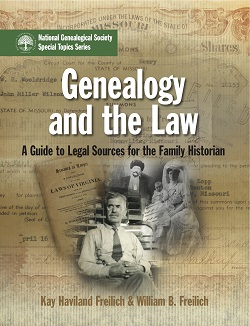
Goal #4 was to follow the GenLaw Study Group on Dear Myrtle's YouTube channel. This study group read and studied the book Genealogy and the Law by Kay Haviland Freilich and William B. Freilich. I did follow through with this goal but recognize that this is an area that I need to grow in, also. What I appreciate about following the study groups with Dear Myrtle is that they are very non-threatening but still rigorous. That is, as rigorous as the follower wants to be. You can study along with the group or just observe. So it is a great introduction to the more difficult topics.


The fifth goal is always a fun thing for me. I love collecting so building a genealogy library was not a chore at all. Of course, I need to build it somewhat slowly as I can't afford to buy all the books I want at once. The book mentioned above, Professional Genealogy, has a wonderful list of sources and recommended reading at the end of each chapter. I used these suggestions when building my library. When available, I purchased or found ebooks online. But my library already fills three tall bookcases. So far I have catalogued about 80% of the books and plan to do the rest soon if for no other reason than to prevent duplicate purchases.

And as for goal #6: so far I am a dismal failure. Although I have broadened my knowledge by attending at least three lectures on the topic of courthouses and legal records, I have yet to visit a courthouse. I still have about 90 days so it is still something I hope to check off my to-do list.

I also created a more detailed list of topics and skills that I need to improve on, and will share that list and my 6 month progress toward those goals in my next post.